
It is easy to become confused. When in Norway we say “scampi”, we actually mean king prawns. Abroad, scampi is the same as Norway lobster (Nephrops norvegicus), which is a near relative of the lobster.
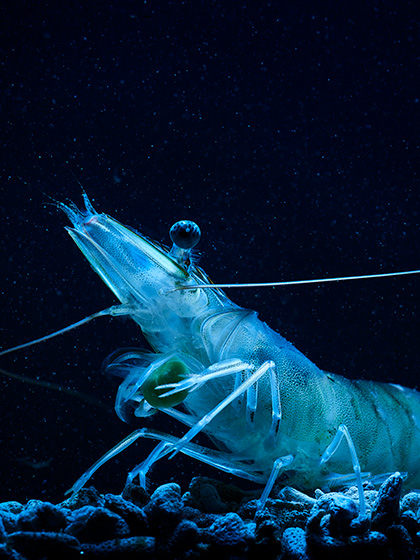
HAPPY PRAWNS is producing king prawns – which simply means big shrimp. Neither “shrimp” nor “prawn” is a scientific name, just a popular term for different species that are quite similar. Our king prawns carry the majestic name of Litopenaeus vannamei. In case you were wondering.

Magnar Hansen, Production Manager, Happy Prawns
The people behind Happy Prawns are enthusiasts who dare to think outside the box.
No. We do not make use of medication – be it antibiotics or other things – ever.
In principle, yes, but we would also like investors to also contribute knowledge that may benefit Happy Prawns.
Our plan is to start commercial operations during February 2018.
Not deviating from the philosophy of sustainable, healthy farming.
Initially, we are targeting aware operators at the top tier of the restaurant and hotel industry. In Norway, of course, but in time worldwide.
There are a few players around the world that have business ideas broadly similar to ours. But it is us that have the distinct advantage of being able to use clean Norwegian seawater.
Our production management team has broad experience from tropical biotopes, from research into and the adaption of them with respect to optimal quality.
No, not at all.
Not formally, but those with which we have been in contact, are looking forward to getting to know our plans and our business better.
Definitively!
We have researched, and are researching, a revolutionary feed for our prawns. We have also developed a tank system that prevents dissemination of disease, and which prevents the release of waste.
In Norway we use the word scampi for what is really only big shrimp. Abroad, scampi is the same as Norway lobster.
Oh yes, trawling for king prawns destroys vulnerable coral reefs and is also a threat to endangered species such as sea turtles.
Certainly not. There is broad documentation of it being a business using child labor, slave like working conditions, extensive use of antibiotics, exhausted soil and massive destruction of mangrove forests.
No. Investigations have shown that producers do not comply with the major requirements for carrying the mark. Besides, the marking requirements do not include human rights and social problems.
Animal welfare is more than avoiding visible unhappiness or aversion. A life is a life, and should be treated with respect. This we facilitate with the best possible feed and clean water. In that perspective, we have the world's happiest prawns!

